

What is eye “alignment” and what does “visual teaming” mean?
Eye Alignment and Visual Teaming
Dr. Lynn Weekley, OD, FOVDR, FAAO
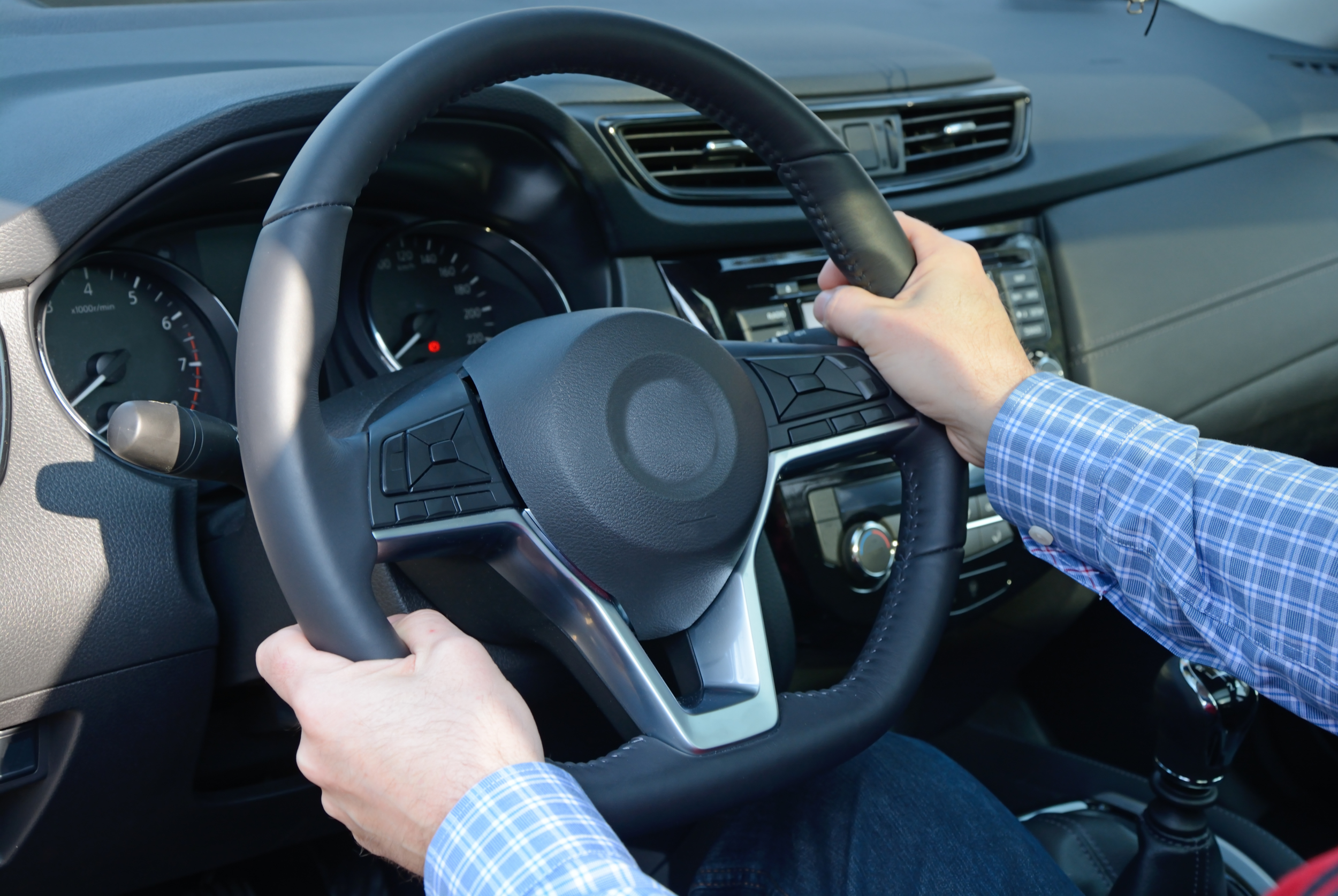
Have you ever been the driver on a long roadtrip and your car is out of alignment? Your car is constantly pulling you too far over to one side of the road. To counteract it, you have to continually pull the steering wheel towards the opposite side to ensure your car drives “straight” in your lane.
Did you reach your destination? Yes.
Were you totally exhausted afterwards? Yes.
Are you looking forward to taking another long roadtrip again? No.
Why not?
That drive wore you out! Even though you reached your destination, you had to put in excessive effort to force your car to stay in your lane. Your shoulders, arms, and hands were clinched the entire time! That drive became a physical chore, and not the enjoyable journey it was supposed to be.

The same is true with your eyes. When your eyes are out of alignment, literally everything you look at becomes a physical chore because you have to put in excessive effort to keep both of your eyes lined up with one another.

Our eye alignment and our ability to keep them perfectly coordinated is especially important when it comes to high precision activities like reading. Think of a sentence in a paragraph just like a lane on a road. If one eye keeps “pulling too far to the left or to the right,” you have to counteract it and bring it back to where it is supposed to be.
You may be asking yourself, “how in the world am I supposed to do that?”

To answer this question, let’s think about it in another way. Have you ever said, “oh my eyes are tired, I need to take a break?” Haven’t we all said that after staring at the computer screen or our phone for hours! You may have said it, but did you think about why you said it?

Your eyes are controlled by muscles, and those muscles can get tired - especially if they are out of alignment with each other and are working hard just to even stay together.
Each eye itself has 6 extraocular muscles that control its movements. Let’s test that together! Ready?
Look to the left. Look to the right. Look up. Look down. Look towards your nose. Look far away. Roll your eyes. Nice job!
So how were you able to do that?
You controlled your eye muscles. Well technically your brain did, but don’t shortchange yourself! Did you notice that both eyes moved together at the same time? Try it again.

Your eyes move at the same time because your brain cortically links the corresponding (paired/yoked) muscles of both eyes together like a beautifully choreographed dance or synchronized swimming. When your two eyes are perfectly in-sync, they are in alignment. When they are not in-sync, they are misaligned.

This ability of our eyes to coordinate with one another in that respect, is commonly referred to as Visual Teaming, which is a function of our Binocular Vision System. In other words, our two eyes (binocular) are supposed to both look at the same exact thing at the same exact time. So regardless of wherever we are looking (up-close or far away) and whatever we are looking at (a big object or a small object), our eyes are supposed to be in unison with one another.
However, that’s not always the case either because of developmental reasons or acquired reasons, such as in traumatic brain injuries where the brain’s signal to move one or more specific eye muscles has been impaired. The general term for when our eyes are out of alignment is called Binocular Vision Dysfunction (BVD) and depending on how they are misaligned determines what specific type of BVD a person has.
What do eye misalignments and visual teaming problems look like?
Sometimes an eye misalignment is easy for anyone to notice and is outwardly observable by an untrained professional. This is typically the case with a condition called Strabismus, commonly referred to as an eye turn. Eye turns present in specific ways, but can vary in size and frequency depending on which muscle(s) are involved and the underlying cause.
Types of Strabismus include:
Esotropia - one eye turns/drifts inwards (note: it can also alternate between the eyes)
Exotropia - one eye turns/drifts outwards (note: it can also alternate between the eyes)
Hypertropia - one eye turns/drifts upwards
Hypotropia - one eye turns/drifts downwards
Below is a picture of a child with Esotropia (one eye is turned inwards).
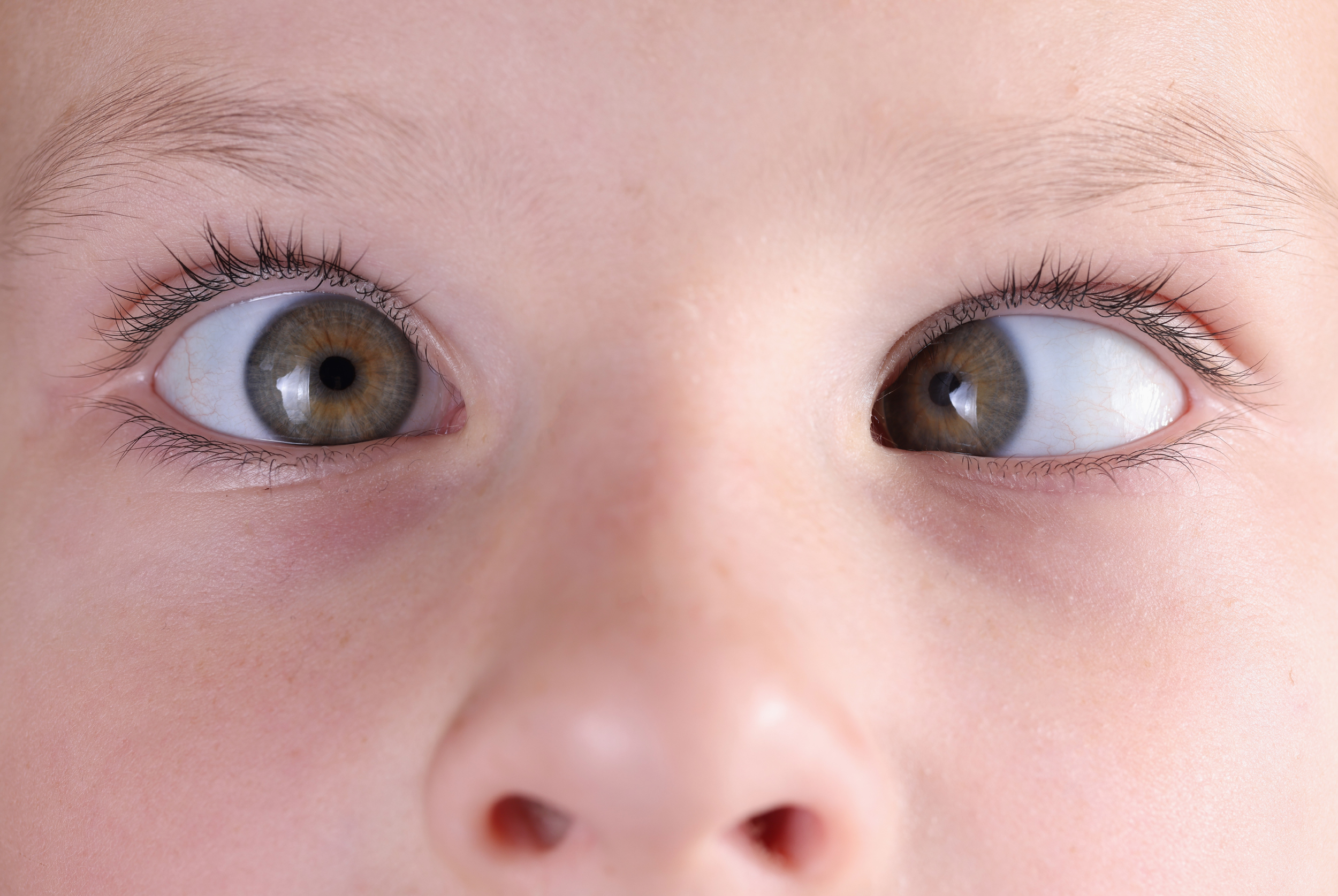
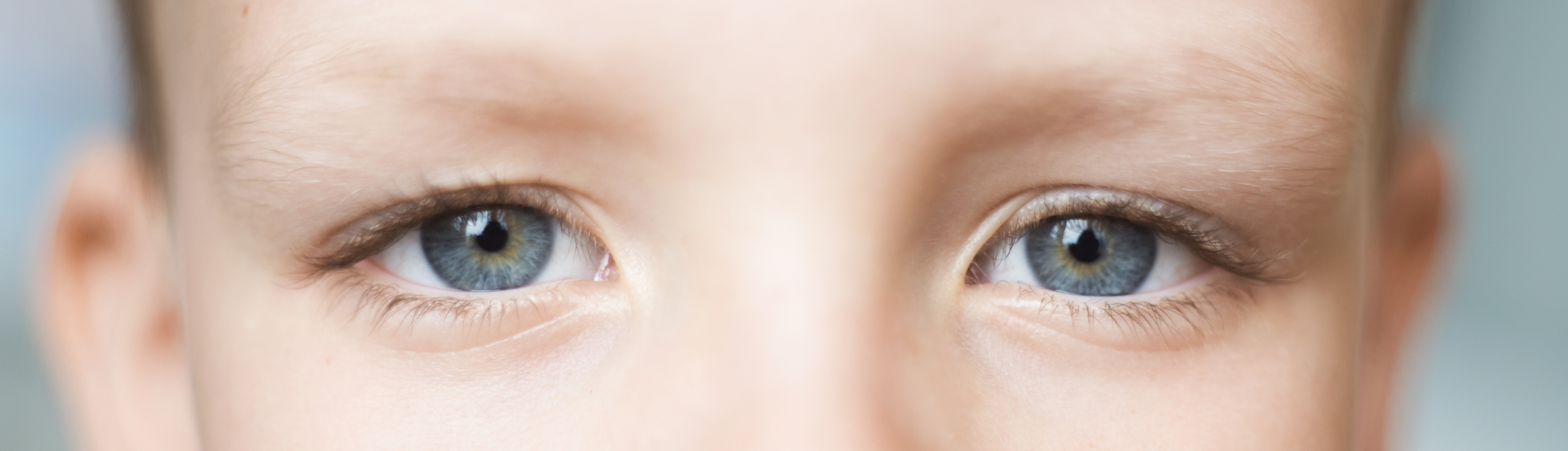
It is easy to notice that a person has a Binocular Vision Dysfunction when one eye is obviously not lined up with the other. Oftentimes however, binocular vision problems are NOT so outwardly noticeable when you are looking at a person. Their eyes look perfectly lined up!




Why is that?
Their eyes look lined up because they are lined up . . . most of the time . . . except for when they’re not lined up.
Wait, what?

Eye Alignment can be task-dependent. Meaning, your eyes can be misaligned only when you are looking far away (like across the room) or only when you are looking up-close (like at your computer, phone, or book).
These types of eye misalignments (Non-Strabismus Binocular Vision Disorders) are not eye turns. They are caused by inefficiencies in our Vergence System. Our vergence system is the part of our Binocular Vision/Visual Teaming system responsible for two very specific visual skills (appropriately named): convergence and divergence.
Convergence is when our eye muscles bring/rotate our eyes inward together (example, looking at your nose).
Divergence is when our eye muscles bring/rotate our eyes away from each other (example, transitioning from looking at your nose to looking across the room).
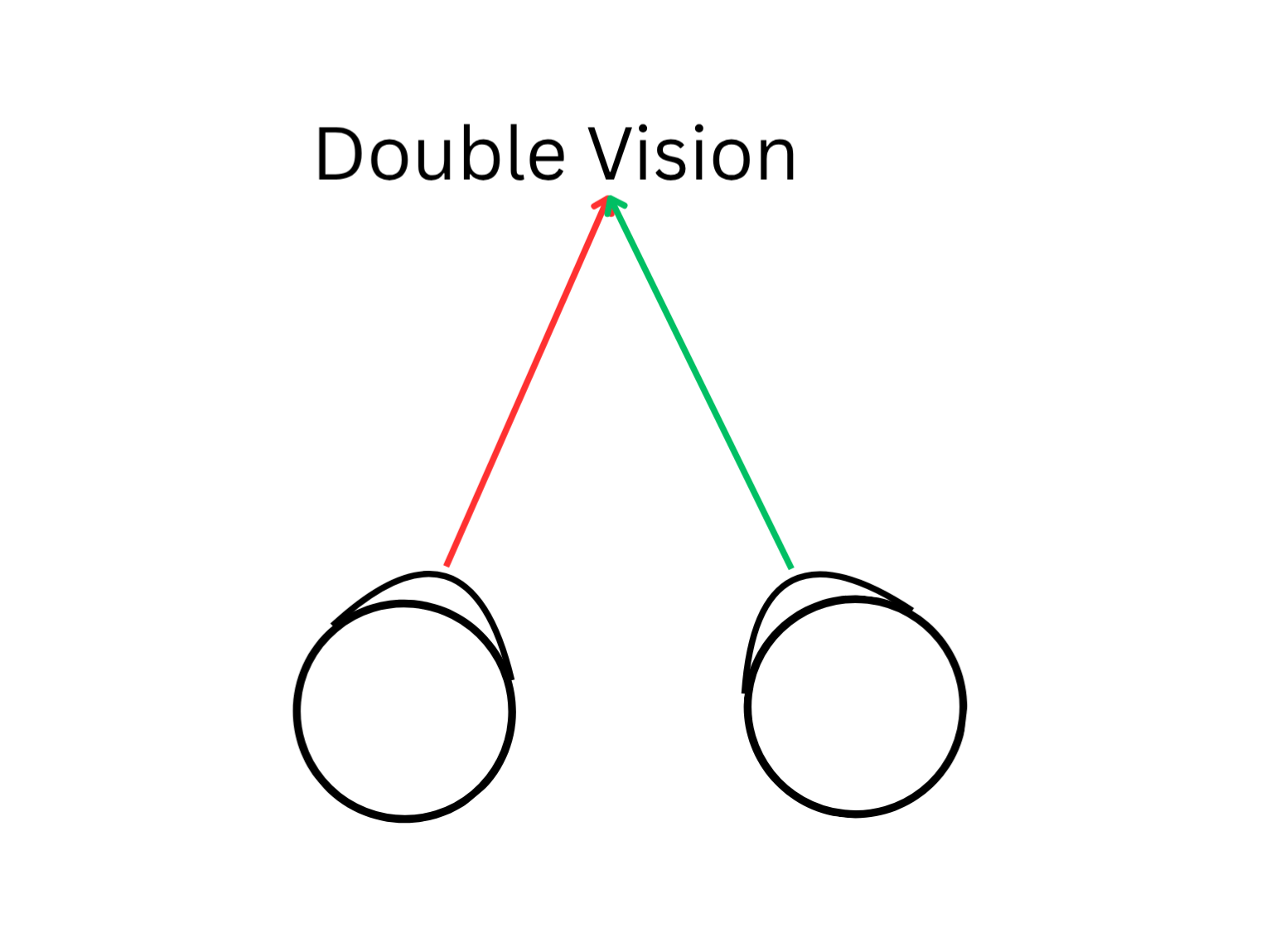
Convergence is important in activities such as reading for example, because both eyes need to aim at the same point (same part of the word) on the page or screen at the same time. Otherwise, we see doubled or stacked images which can appear blurry, or shadowy, or like the words on the page are moving around. Different people describe it in different ways, and most of the time (especially with children) they don’t think to mention it because that’s the way it has always looked to them.
Here is a diagram of the eyes accurately converging while reading the words “Double Vision.”
What the text looks like from the reader’s point of view:
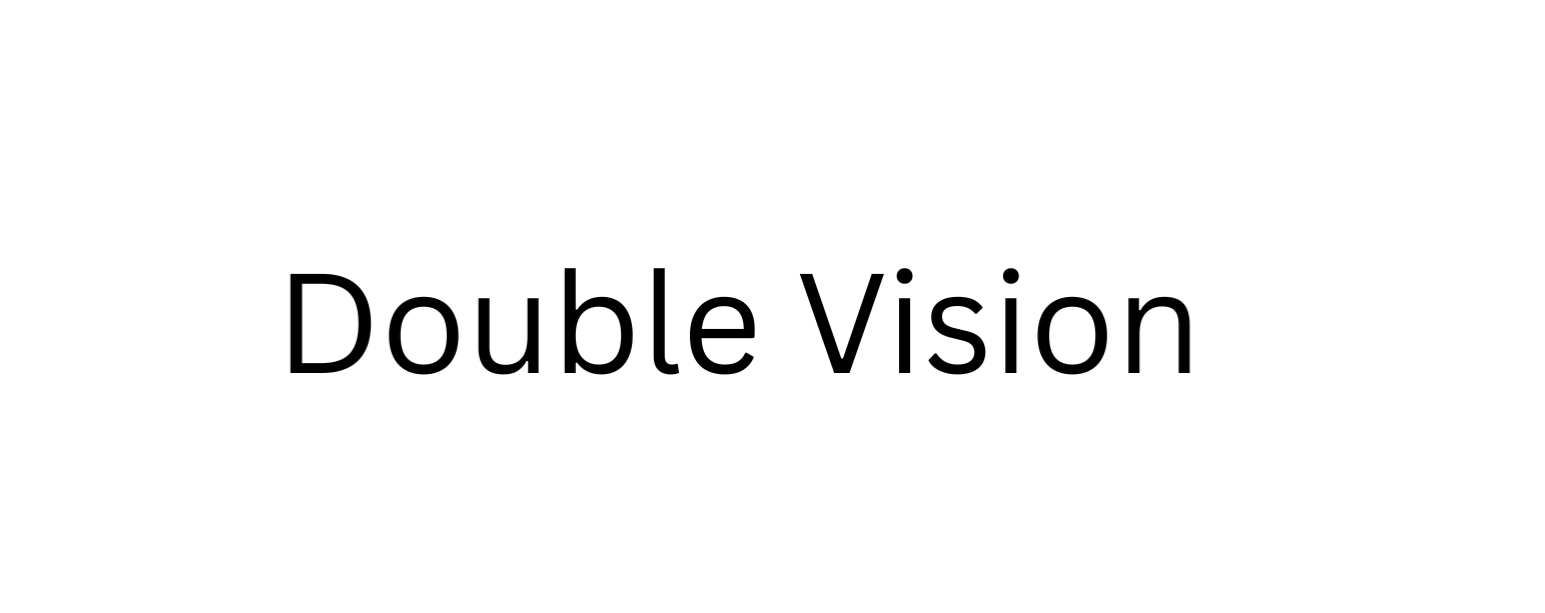
Note how both eyes are perfectly aimed at the same part of the word “Vision.” This allows us to see the word as one word, even though we have two eyes. Now look at the difference if the aim of one eye is just a little bit off. That LITTLE bit of misalignment, makes a BIG difference.
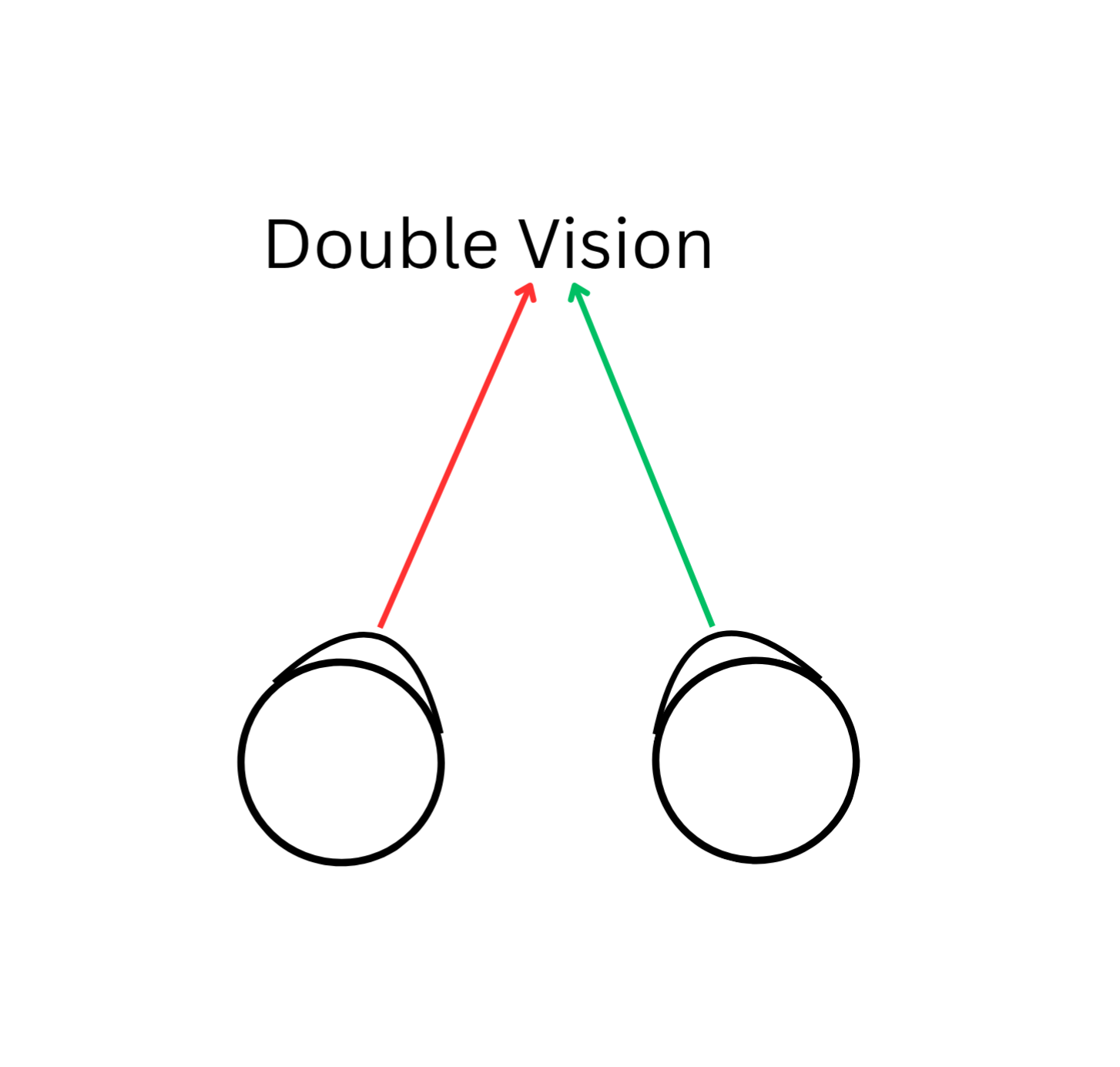
Here is a diagram of inaccurate convergence while reading.
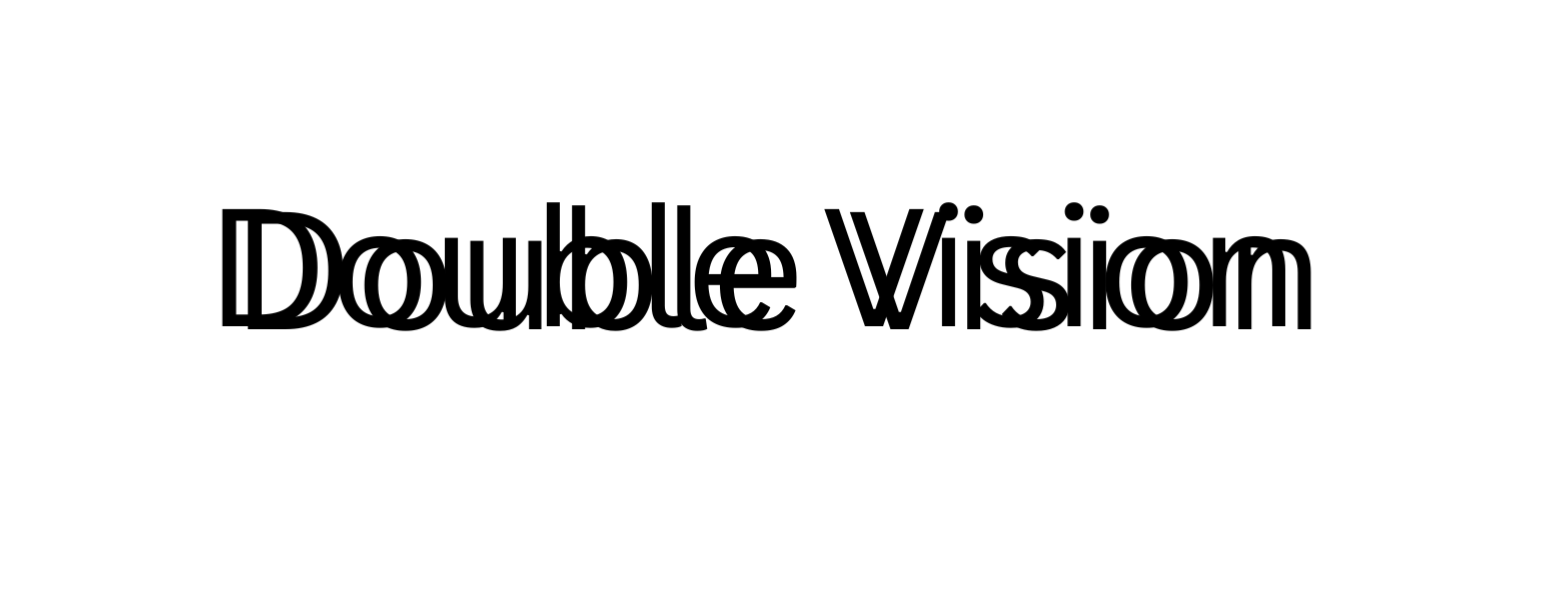
What the text looks like from the reader’s point of view now:

Did you automatically want to look away, scroll past it quickly, or squint your eyes to try and see it more clearly? It’s ok you can admit it, you probably did. It’s certainly blurry and uncomfortable to look.
Did squinting help clear it up? It definitely did not. Good try though!
Why not?
Squinting won’t clear it up because it’s not a visual clarity issue, it’s a visual teaming issue. Since the eyes are misaligned (even by this little bit), they are not aiming at the exact same point on the word. So you are actually seeing double because you are seeing the word twice - once from each eye. Since the eyes are not coordinating like they should, the brain cannot put it together into one word. So glasses, contact lenses, or LASIK cannot clear it up because this type of “blurry vision” is not from needing a prescription, it’s actually double vision.
In real life, people with the type of Binocular Vision Disorder shown in the above diagram (Convergence Insufficiency) cope with it in one of two ways. Either they close one eye (or find any clever way to block an eye - turning their head to the side, covering an eye with their hair, or laying down on their arm while reading, etc.) or their brain starts to ignore the image from an eye (a process called Suppression).

I can’t see double if I’m only using one eye! Problem solved! Right? Not exactly.
While ignoring the image from one eye certainly does clear up your vision because you’re not seeing double anymore; it leads to all sorts of efficiency issues and even physical problems. It’s like choosing to use only one hand to do everything since that hand is more capable. Try it for a day and see how much longer it takes you to do your daily tasks.
For students, if they are using this coping mechanism (using one eye) it can only sustain them for so long. Once their schoolwork and homework starts increasing (starting around 3rd and 4th grade), they’re going to start falling behind because they cannot keep up with the workload. Specifically, their eyes cannot keep up with the workload.
The same is true for students in high school and college, and even adults in their jobs. It’s not something you “grow out of,” because it stays with you until it’s properly addressed through interventions such as Vision Therapy (VT). Vision Therapy works by strengthening the visual system and making the eye-brain connection more efficient, so that it can operate how it was designed to.



Referring back to the above “Double Vision” diagrams - isn’t it interesting that it looks more “blurry” or “shadowy” than it does double? You can still kind of read that it says “Double Vision.” For people with Binocular Vision Disorders, this “blurry” vision fluctuates throughout the day depending on how much control they have over their eye muscles. Typically they are performing at their best in the morning, when their eye muscles are not tired. At that point in time, they can see perfectly fine because they can engage their eye muscles, and keep their eyes together as a team - so there’s no eye misalignment . . . yet.
As the day goes on however, their eye muscles fatigue from working so hard to stay together. When that happens, their eye misalignment starts showing up more, and their vision consequently starts to go more “blurry.” Which as we know, means that it is actually starting to go double.
Now take a look just at the word “Vision.” The more tired you become, the more the word separates into two. If you didn’t already know that was a “V” you would think it was a “W.” If you didn’t already know that was an “n” you would think it was an “m.”
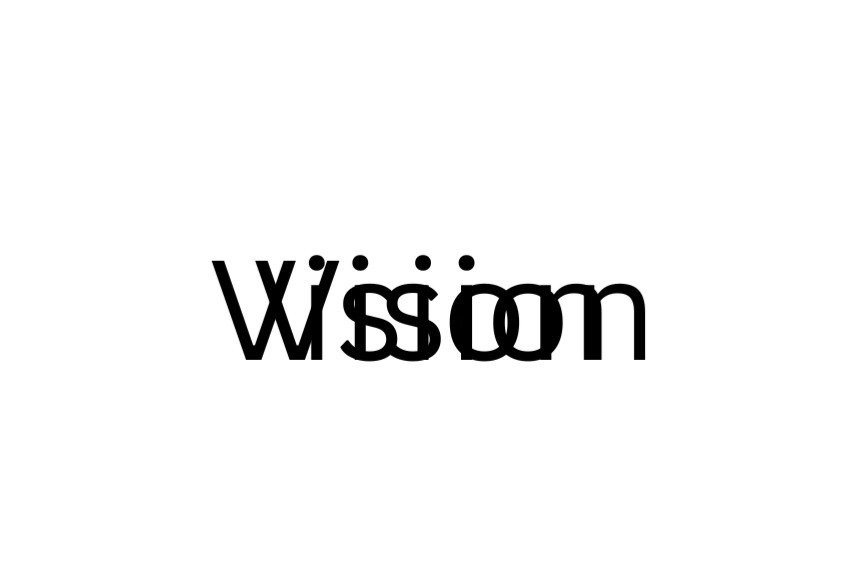
See how double vision can impact school-aged children learning how to read and how to spell!
Let’s take a closer look at the visual system’s convergence and divergence skills. Convergence is the skill set our eyes use when looking at objects within an arm’s length, such as a book, computer, or phone, etc. The eyes need to come together in order to see the object as one (not double/shadowy).
Divergence is the opposite skill set where our eye muscles bring/rotate our eyes away from each other becoming more parallel to each other. Divergence is used as our eyes are looking at anything farther than an arm’s length away and beyond towards the distance, such as looking across the classroom or out a window, etc.
Both skill sets are equally important as we look around our daily environments. Eye alignment, as well as convergence and divergence ability, make up our Visual Teaming system.
Problems can arise when our eye muscles are either under-innervated (Convergence Insufficiency or Divergence Insufficiency) or over-innervated (Convergence Excess or Divergence Excess) when performing visual tasks. When diagnosing a visual teaming issue, it is either categorized under convergence if it is happening up-close, or it is categorized under divergence if it is happening at distance.
Non-Strabismus Binocular Vision Disorders include:
Convergence Insufficiency
Convergence Excess
Divergence Insufficiency
Divergence Excess
*See the below illustrations.
Convergence
Accurate Convergence
(The eyes are aimed accurately at near-point.)
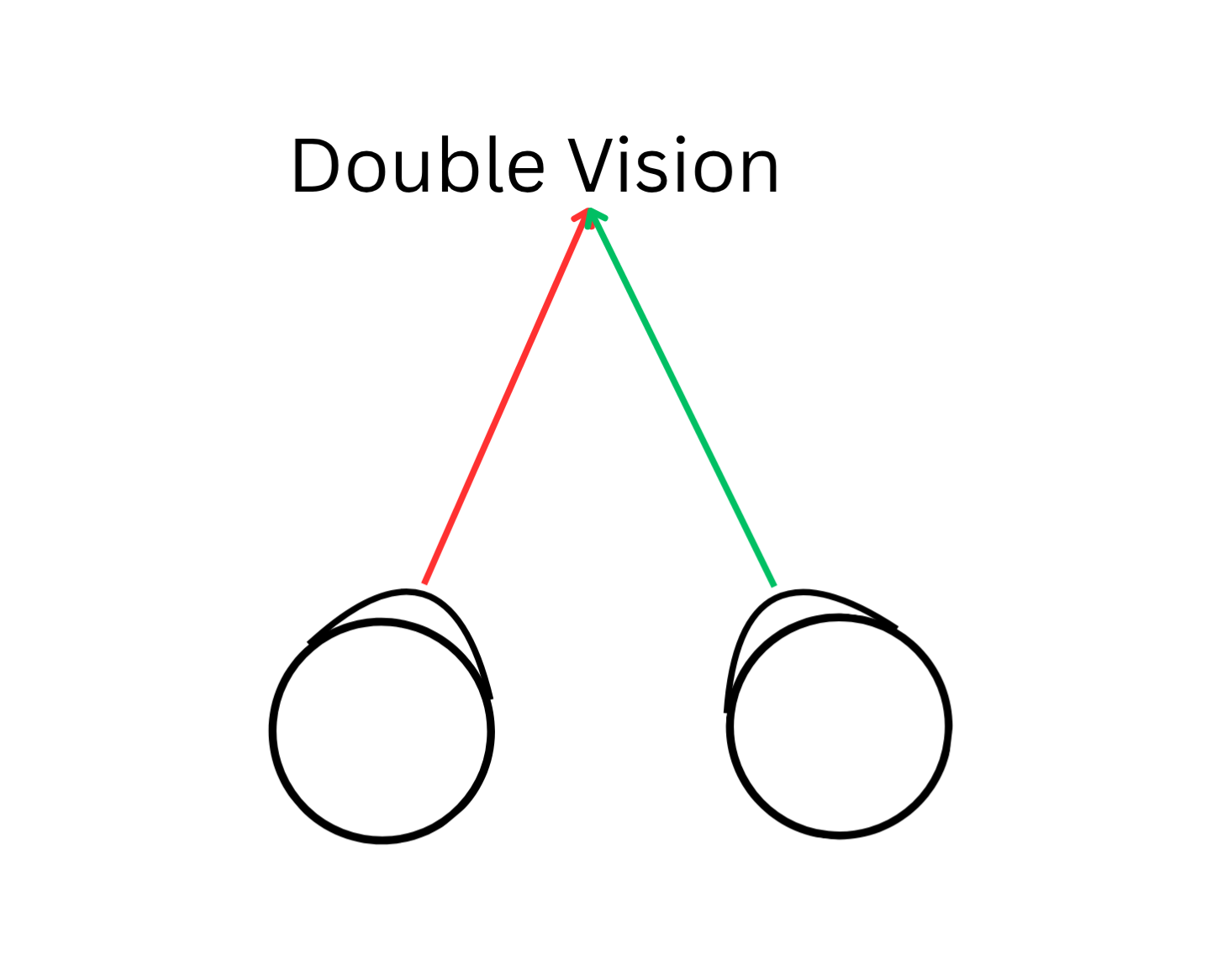
Patient Point of View
Convergence Insufficiency
(The eyes muscles are under-innervated at near-point causing them to aim behind the target.)
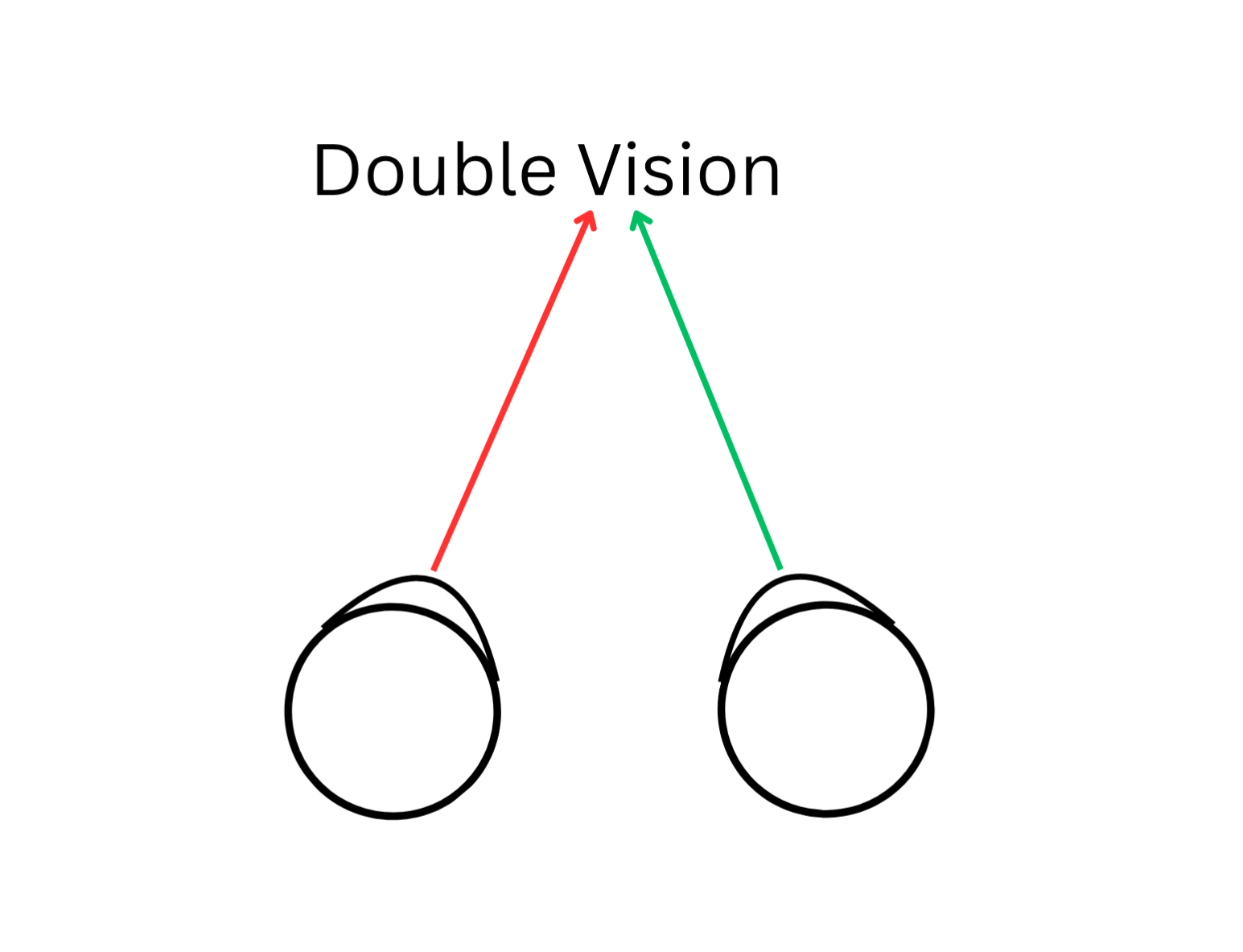
Patient Point of View
Convergence Excess
(The eyes muscles are over-innervated at near-point causing them to aim in front of the target.)
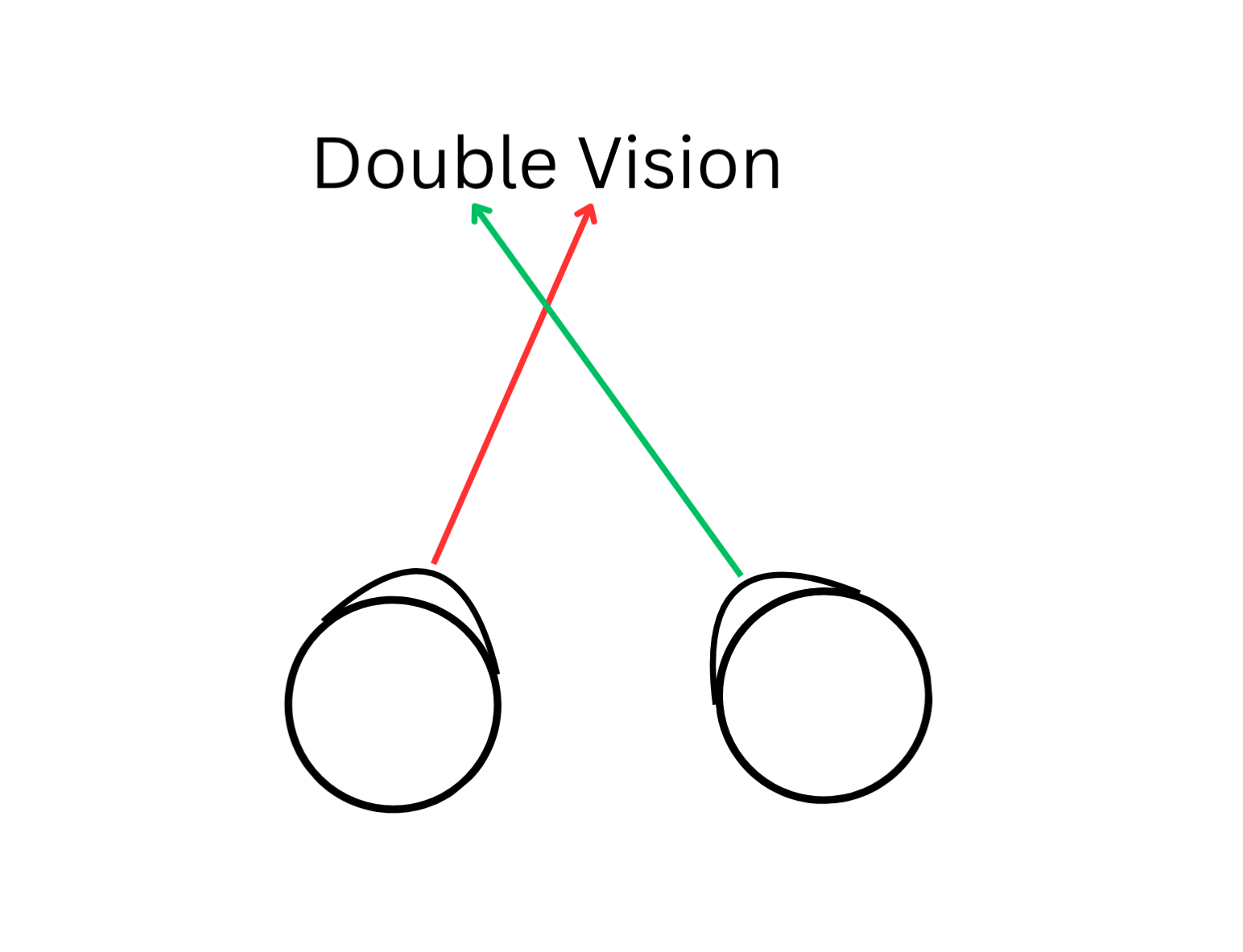
Patient Point of View

Of note, a patient may not be able to tell if their double vision while reading is from a Convergence Insufficiency or a Convergence Excess since it looks similar. Clinically however, the two conditions are very distinct.
Divergence
Accurate Divergence
(The eyes are aimed accurately at distance.)
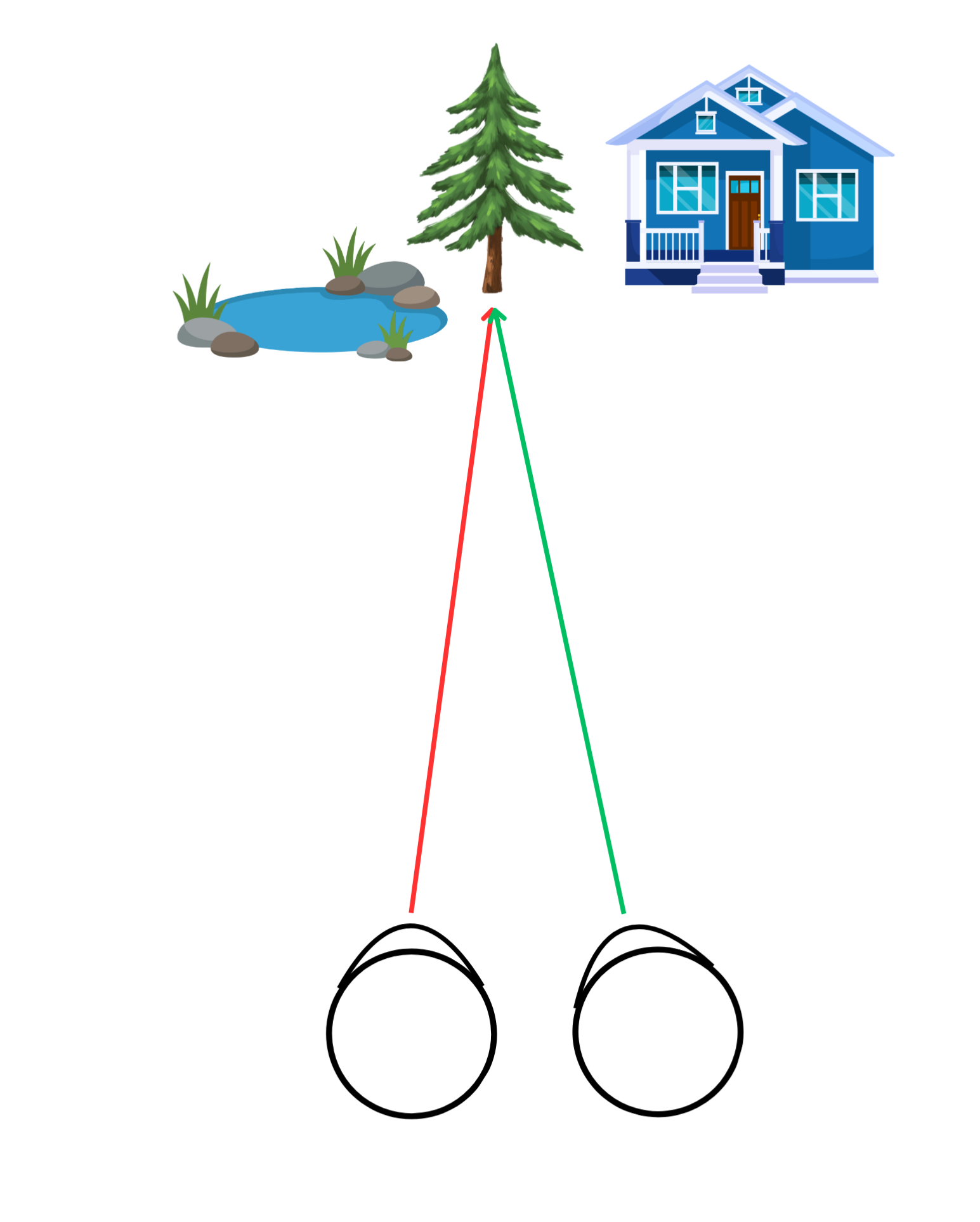
Patient Point of View

Divergence Insufficiency
(The eyes muscles are under-innervated at distance causing them to aim in front of the target.)
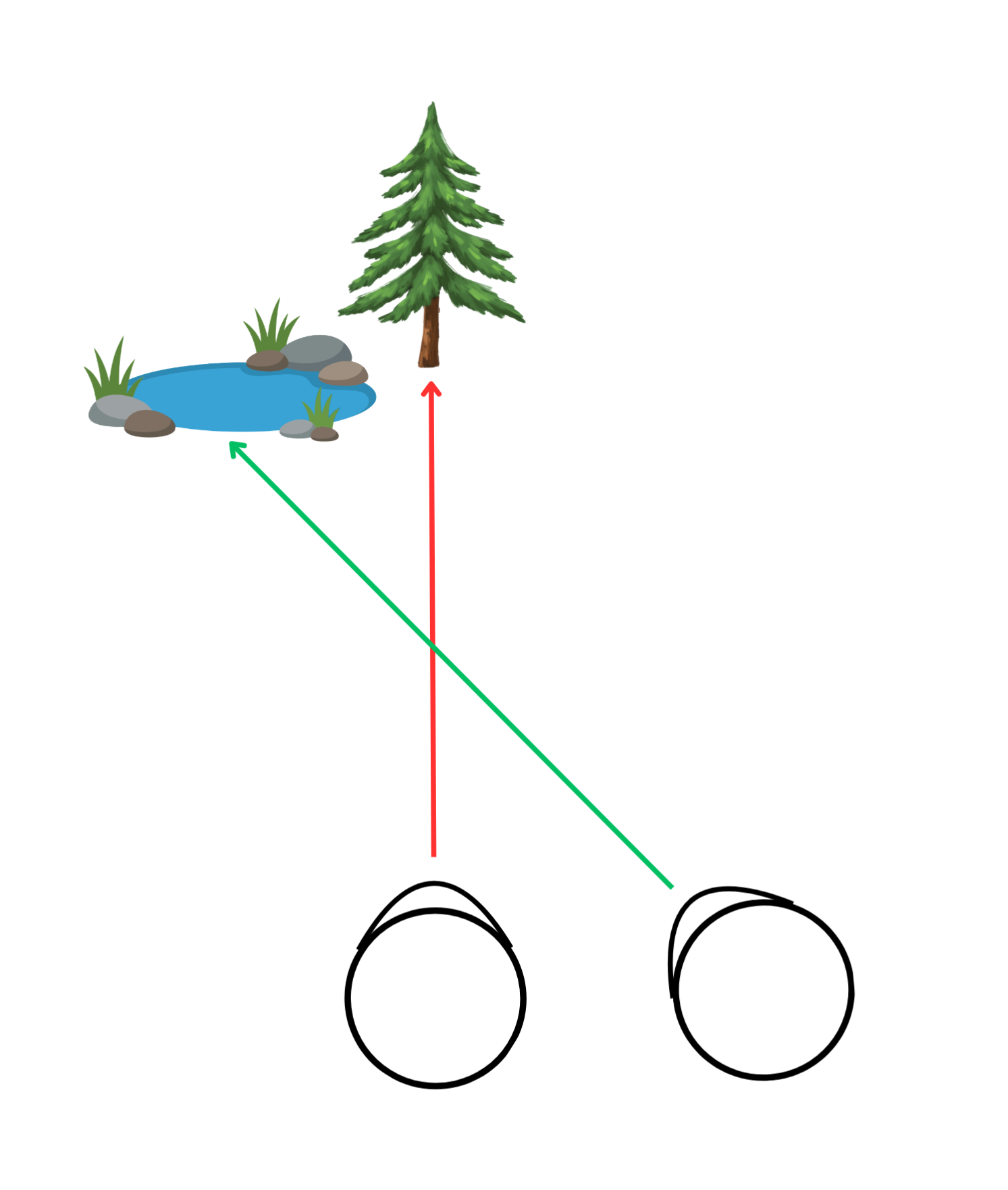
Patient Point of View

Divergence Excess
(The eyes muscles are over-innervated at distance causing them to aim to the side of the target.)
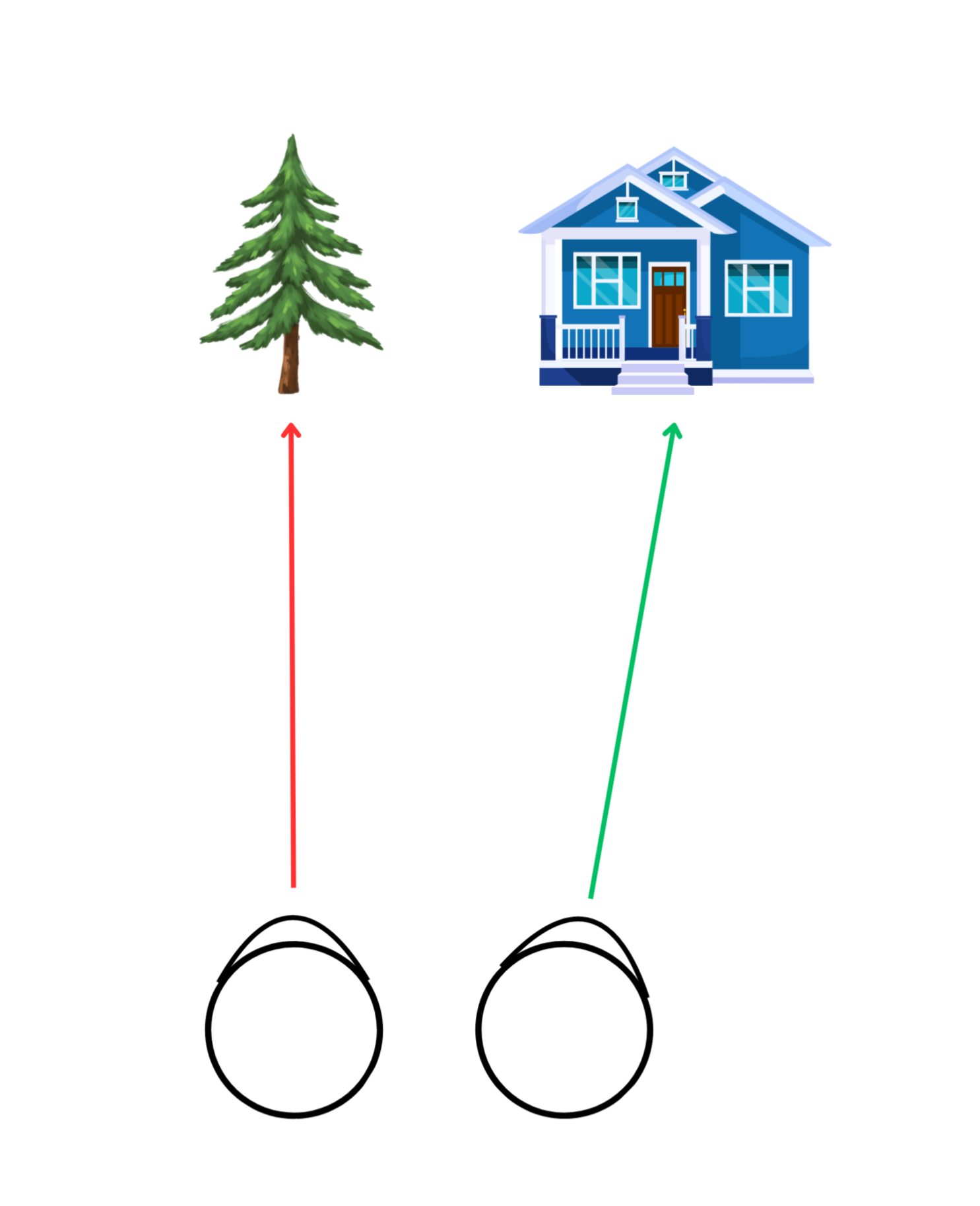
Patient Point of View

The above binocular vision dysfunctions lead to visual confusion since objects do not appear in their actual locations, which causes depth perception issues and overall poor visual performance.
Symptoms of Binocular Vision Dysfunctions include:
Blurry, shadowy, or double vision
Eye strain
Headaches
Light sensitivity
Car sickness
Dizziness
Fatigue after reading or using the computer
Inability to concentrate
Extra time needed to complete work/assignments
Performance is not reflective of potential/intellect
Avoidance of reading
Frustration with reading
Homework battles
Difficulty with reading speed and comprehension
Skipping words and/or whole lines while reading
Using a guide (finger or separate piece of paper) to stay on a line of text
Frequently needing to re-read
Words running together/appearing to move on the page
Closing one eye while reading
Poor eye-hand coordination and handwriting
Difficulty with sports
Depth perception issues and problems correctly judging distances
Etc.
Specialized eyeglasses, prism lenses, and in-office Vision Therapy can address the above symptoms and binocular visual dysfunctions by improving the brain’s ability to control and coordinate the eye muscles. If you or your child is struggling with visual performance from a suspected visual teaming issue, please reach out to our office at (936) 935-2020.